
What it proved
AI speed becomes commercially useful only when paired with repeatable human assembly and QA.
Case study
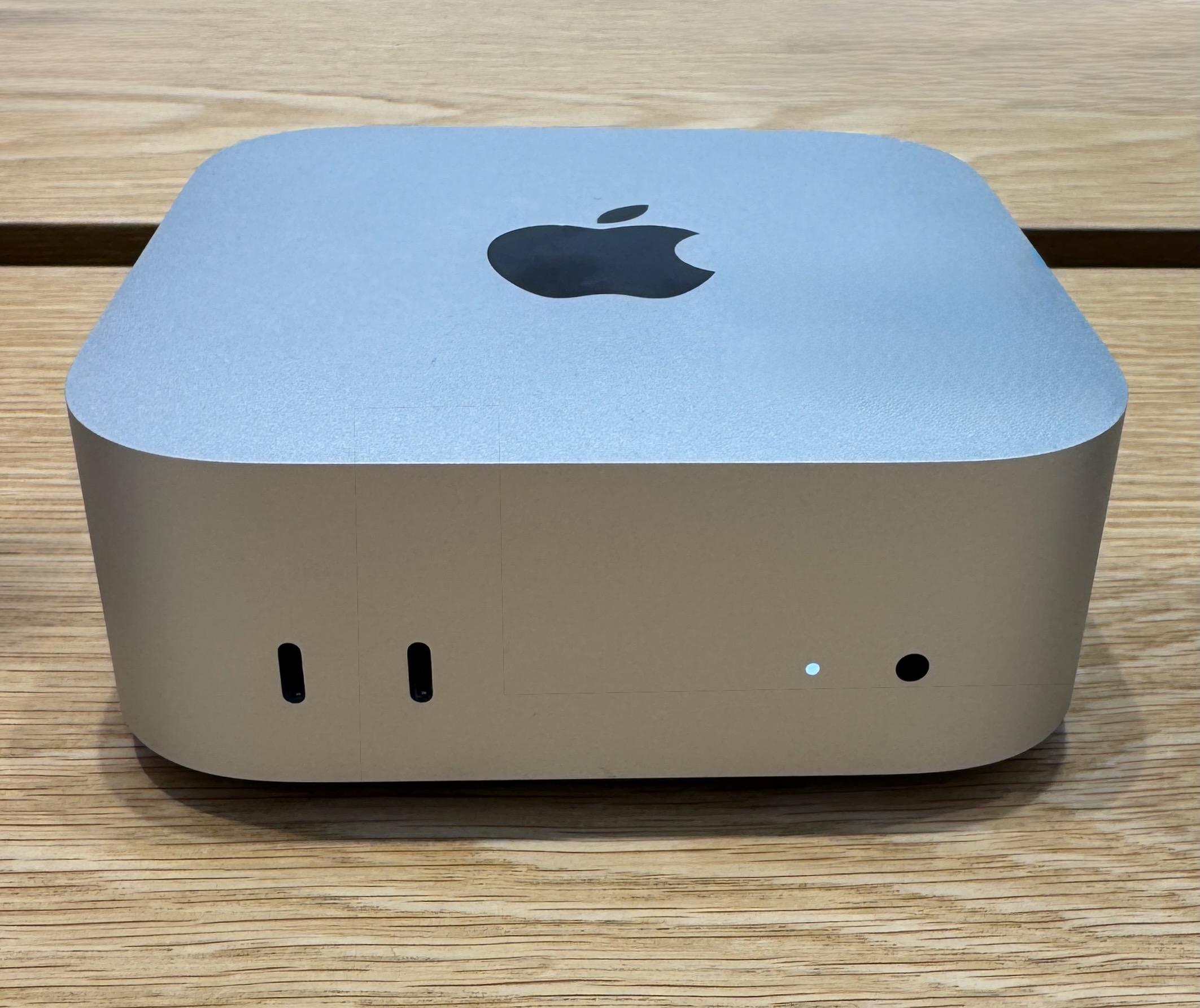
Before Hatched Stacks became a subscription, the founder used the same AI stack, VA workflow, and build playbook to ship a portfolio of functioning businesses on one Mac mini.
The point was not to make a prototype. The point was to prove that a small, disciplined operating system could turn an idea backlog into owned assets.
The machine became the test bench for the Hatched Stacks model: one idea enters, a one-page brief comes out, a Build Lead assembles the product, QA checks it against a Definition of Done, and the result ships with source code, accounts, documentation, and launch instrumentation.
That proof changed the service design. Hatched Stacks would not sell vague AI product development. It would sell a production lane with specific cadence, scope boundaries, hardware ownership, and daily communication.
AI speed becomes commercially useful only when paired with repeatable human assembly and QA.
The Mac mini became a customer-owned operating anchor instead of invisible agency infrastructure.
Repos, live URLs, runbooks, credentials, analytics, billing setup, and operating context.